Environmental Impact
Environmental Impact
This section describes the ruinous consequences of Reef/Black Desert's planned 1,250 acre four-golf course resort and airport on the ancient ecosystem of Shivwits sacred lands, the interconnected habitat, and the plants, animals, and creatures found there, including four federally endangered species. Also described below are the cumulative detrimental impacts of golf course pesticides and chemically contaminated irrigation wastewater on the areas' air, soil, water, wildlife, plants, and the environment.
Scroll down for further information on each of the above topics and for print and take PDF overviews. HERE is a two-page summary of the environmental effects of chemically toxic golf courses. For more detailed information, please refer to the PDFs below entitled Health and Environmental Dangers of Reef's Shivwits Development and How Reef's development imperils endangered species.
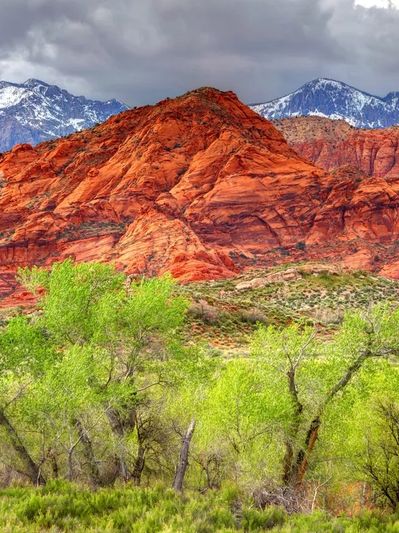
The Ecosystem of Our Sacred Lands: The wild desert and unique topography of the Shivwits Band of Southern Paiutes Tribal lands host a fragile ecosystem with diverse plants, bushes, cactus, and trees, including ancient groves of desert blackbrush, endangered milkvetch, sagebrush, creosote, rabbitbrush, cacti, coyote and red willows, Utah juniper, and pinyon pines. The array of native and migratory birds living on or visiting the reservation seasonally include the endangered southwestern willow flycatcher, sparrows, gnatcatchers, quail, songbirds, vireos, warblers, hummingbirds, great horned, burrowing, and western owls, golden eagles, peregrine falcons, red tail and coopers' hawks, American kestrel, and the rare common black hawk.
Creatures inhabiting the Shivwits desert include the small antelope ground squirrel, the tiny canyon tree frog, the Great Basin spadefoot toad, snakes of many sorts, reclusive Gila monsters, the Mohave banded gecko, chuckwalla, ground nesting bees, endangered Mojave Desert tortoises, black tailed jackrabbits, desert cottontail, kit fox, coyotes, lynx, and cougars. The desert bighorn sheep, sacred to the Shivwits people and drawn on the Paiute's ancient petroglyphs, are still seen on and near the reservation.
Geology and Weather Impacts: According to The Paiute Indian Tribe of Utah from a detailed report in 2022:
Weather data shows these "temperature extremes have increased in the last ten (10) years. It is likely that a deeper examination of weather data would show even greater variables in what were "typically" wet or dry periods. The geology in southwestern Utah is the meeting of the Mojave Desert, Great Basin, and Colorado Plateau. The topography is marked by high peaks, cliff sides, and canyons. The geology and topography of the Tribe’s Reservation susceptible to flooding, wildfire, earthquakes, and landslides.
"Additionally, due to geographic positioning and shifts in weather patterns, the Reservation suffers from sustained drought conditions. Extreme heat is damaging to soil conditions, water supplies, and to the health and wellness of the human population. While extremes in precipitation can be equally damaging, it brings additional risk elements such as landslides, damage to infrastructure, including roadways, and water and wastewater systems."
The topography, geology, and climate of the Shivwits Reservation means that Reef dumping 2,000 acer feet or more of secondary water every year to irrigate four Mojave Desert located golf courses will almost certainly exacerbate the potential for flooding and landslides which will damage soil conditions, water supplies, and, because of the impact of flooding carrying toxic secondary wastewater chemicals into the Shivwits residential area, imperil human health.
Biology and Ecology Impacts: It's deeply worrisome that each of the above listed array of plants, animals, and creatures can be found on or very near to the 1,250 acres of Paiute land slotted to become ravaged terrain by Black Deserts' three additional 18-hole golf courses, a practice course, airport, clubhouse, and other amenities for luxury resort guests. Every one of these interdependent plants, animals, birds, bees, trees, reptiles, and other desert creatures contributes to the survival of one another, enriching the unique and complex biodiversity of the Shivwits landscape. Ground nesting bees, for example, are one example of an important and threatened ingredient for the area's ecosystem, essential to the pollination of cacti and other flowering plants, including the endangered Shivwits milk-vetch.
Plants and creatures in the Shivwits region of the Mojave Desert survive the harsh climate through a symbiotic relationship and an integral food web. Plowing under vast portions of this vital ecosystem and replacing it with saturated mono-culture turf will transform the actual desert into an ecological desert. Unlike new golf courses located in already contaminated urban environments, placing so many golf courses on Shivwits virgin desert landscape endangers an entire intact desert habitat and destroys an old and fragile ecosystem of interconnected plants, trees, birds, bees, animals, other creatures which rely on a precise natural balance for survival.
Habitat Fragmentation, the bisecting of natural areas by land development, has proven to be nearly as bad for species survival and habitat as land development itself. Black Desert/Reefs massive three-18-hole golf course resort and airport will isolate wildlife populations and significantly threaten biodiversity, in effect blockading a healthy, interconnected habitat, initiating ecosystem disruption, and causing ecological degradation. The movement of native species will decrease and increased vulnerability to predators will occur. Add the volume and array of toxic chemicals in the irrigation wastewater Reef Capital/Black Desert will use to water its four golf courses, and the adverse impact on Shivwits land, soil, water, air, plants, animals, and environment will be irreparable.
Federally Endangered Species found on and near the Shivwits Reservation, known in Paiute as Pika'aya Tooveep or "Tortoise Country," and put at risk of extinction by Reef’s massive golf course resort include the Mojave Desert Tortoise, the Southwestern Willow Flycatcher, and the Shivwits and Holmgrens Milkvetch. For more information, please see the PDF at the bottom of this page entitled: How Reef’s Shivwits Development Imperils Endangered Species.
The soil, water, air, plants, animals, creatures, and the environment of Shivwits native lands will be irreversibly contaminated by the toxicity, quantity, and duration of the pesticides, herbicides, and insecticides Reef/Black Desert will use for golf course maintenance and by the large volume of chemically contaminated irrigation wastewater Reef/Black Desert will need to use to keep four golf courses in the Mojave Desert green year round.
Soil Contamination: PFAS (forever chemicals) which include pesticides, are persistent in the environment, highly bioaccumulative, and distributed widely among ecosystems. Wastewater treatment plays a large role in increasing the volume and toxicity of PFAS and pesticides in water, soil, and the environment. Washington County's secondary wastewater irrigation already measures toxic levels of the kinds of PFAS which rapidly accumulate in soil. A 2021 article in the Journal of Environmental Engineering notes that PFAS are not degraded by any level of current wastewater treatment and discusses the role of wastewater in cycling PFAS and "in generating PFAS in soils.”
Water Contamination: The EPA and numerous credible studies reveal that in liquid form, PFAS, pesticides, pharmaceuticals, and other Chemicals of Emerging Concern form chemical run off, infiltrate soil, and migrate through underground aquifers. PFAS containing wastewater irrigation can cause private well contamination within a 3–6-mile radius and underground movement and surface runoff over time can extend groundwater contamination many miles downstream or down-gradient from the source.
Air contamination: Research from the National Institute of Environmental Health Sciences and other studies reveals that PFAS can be dispersed to the surrounding landscape via air by secondary wastewater irrigation. Very tiny solid and liquid droplets suspended in air and distilled from the forever chemicals and chemically infused golf course irrigation wastewater remainders will form spray-drift and be borne on SW Utah's ubiquitous winds and distributed for miles, contaminating the surrounding landscape.
Animal and plant contamination: PFAS enter the environment through secondary wastewater and are persistent in the environment and animals. Toxicological evidence reveals that PFAS have adverse reproductive, developmental, and immunological effects in animals. The CDC toxic disease registry summarizes the literature on how PFAS adversely affect animals: “These animal studies have found that PFAS can cause damage to the liver and the immune system. PFAS have also caused low birth weight, birth defects, delayed development, and newborn deaths in lab animals.” National Institute of Health studies show forever chemicals damage plant cell structure and function.
Environmental Contamination: The technology to completely destroy and safely dispose of PFAS does not yet exist. Research is ongoing, and scientists hope one day PFAS in water and wastewater can be completely eradicated. Unfortunately, by the time a solution to PFAS contamination is discovered, the toxic wastewater irrigation required by Reef Capital's four desert golf courses will have permanently and irreversibly contaminated 1,250 acres of Paiute sacred landscape.
Substance, Dose, and Duration Impacts: Toxicologists determine the degree of human and environmental harm based on the kind of toxin, the amount of toxic exposure (the dose), and the duration or frequency of contact. In the case of Reef's planned three 18-hole golf course development, the toxins are pesticides, PFAS, and Chemicals of Emerging Concern, and the dose is the massive volume of toxin-containing secondary wastewater required to irrigate three 18-hole golf courses and one practice course in high desert heat. Because the duration is a 99-year lease, the environmental dangers and hazards to wildlife and plants exponentiate accordingly, negatively impacting the epigenetics of humans, plants, and animals for more than a hundred years.
The aggregate exposure of routine, large-volume multi-golf course pesticides and chemically contaminated wastewater being released by Reef/Black Desert into the air, soil, land, and water will endanger Paiute sacred lands and surrounding land and communities such as the Shivwits family neighborhood and Ivins City neighborhoods permenantly.